%201.svg)

Home health coding is facing a new era where subtle gaps that went unnoticed in the past now have real repercussions. What was once an exercise of selecting codes has grown into something that requires sharper clinical awareness, stronger documentation habits, and insight into how payers read the record. And the margin for grey reasoning or loosely written notes is getting smaller by the day.
Accurate home health care coding in 2025 depends on how well an agency links its documentation, OASIS scoring, and clinical logic. Agencies that consider coding part of the clinical narrative, not a clerical afterthought, are already seeing improvements in reimbursement timelines and audit stability. Those that do not will feel the pressure long before the year ends.
The Changing Landscape of Home Health Coding
The regulatory expectations have become more stringent. CMS reviewers expect much more than availability of information. They are seeking consistency between what is written, coded, and reflected in the care plan. Home health care coding now relies on documentation that is consistent from start to finish.
Greater Reliance on OASIS for Clinical Alignment
OASIS responses no longer serve simply as scoring fields; they frame the entire clinical picture. If the scoring is too general or misses the nuance of how the patient functions day to day, the code selection becomes shaky. Auditors pick up on that in a heartbeat.
Increased Focus on Medical Necessity
Medical necessity should clearly appear in the narrative. Diagnoses unsupported clinically will not survive review. It becomes difficult to defend coding when the chart does not indicate why the patient needs the care that was billed.
Higher Standards for Sequencing and Specificity
Sequencing now indicates the real clinical hierarchy. Payers interpret it as a reflection of the patient’s condition, not a list of possibilities. Specificity supports severity, decline, and interventions.
A Shift Towards Operational Efficiency
Agencies want workflows that move faster without generating additional clarification rounds. The future of coding belongs to teams that can maintain accuracy without slowing down reimbursement.
OASIS Documentation and Coding Accuracy
OASIS drives both clinical alignment and defensibility. Clear, specific OASIS responses reduce clarification loops and help coders translate the record without reconstruction. Agencies should ground OASIS practice in the current OASIS-E User Manual and the OASIS User Manuals page for definitions, item intent, and conventions (OASIS-E Manual PDF • OASIS User Manuals page).
Compliance and Quality Trends in 2025
Compliance increasingly relates to how the story unfolds in the chart. Not just accuracy, but cohesion.
Increased Focus on OASIS Documentation Quality
OASIS has become the backbone of both coding and medical review. If functional descriptions feel generic or disconnected from clinician observations, the entire claim becomes harder to defend.
Narrative Alignment Across Disciplines
Reviewers now compare nursing notes to therapy assessments and care plans. When the same patient is described in conflicting ways by clinicians, the claim begins to lose its credibility.
Increased Audit Activity
Audit cycles continue to expand. Reviewers seek measurable decline, justifiable care decisions, and visible changes across visits. Anything inconsistent prompts deeper inspection. The Medicare FFS improper payment rate was 7.66 percent (FY 2024), highlighting persistent vulnerabilities in documentation and review (CMS CERT overview • CMS FY 2024 fact sheet). OIG has also reported that one-third of general inpatient care (GIP) stays were billed inappropriately, underscoring risks tied to level-of-care justification (OIG GIP report).
Coding Quality Improvement as a Compliance Strategy
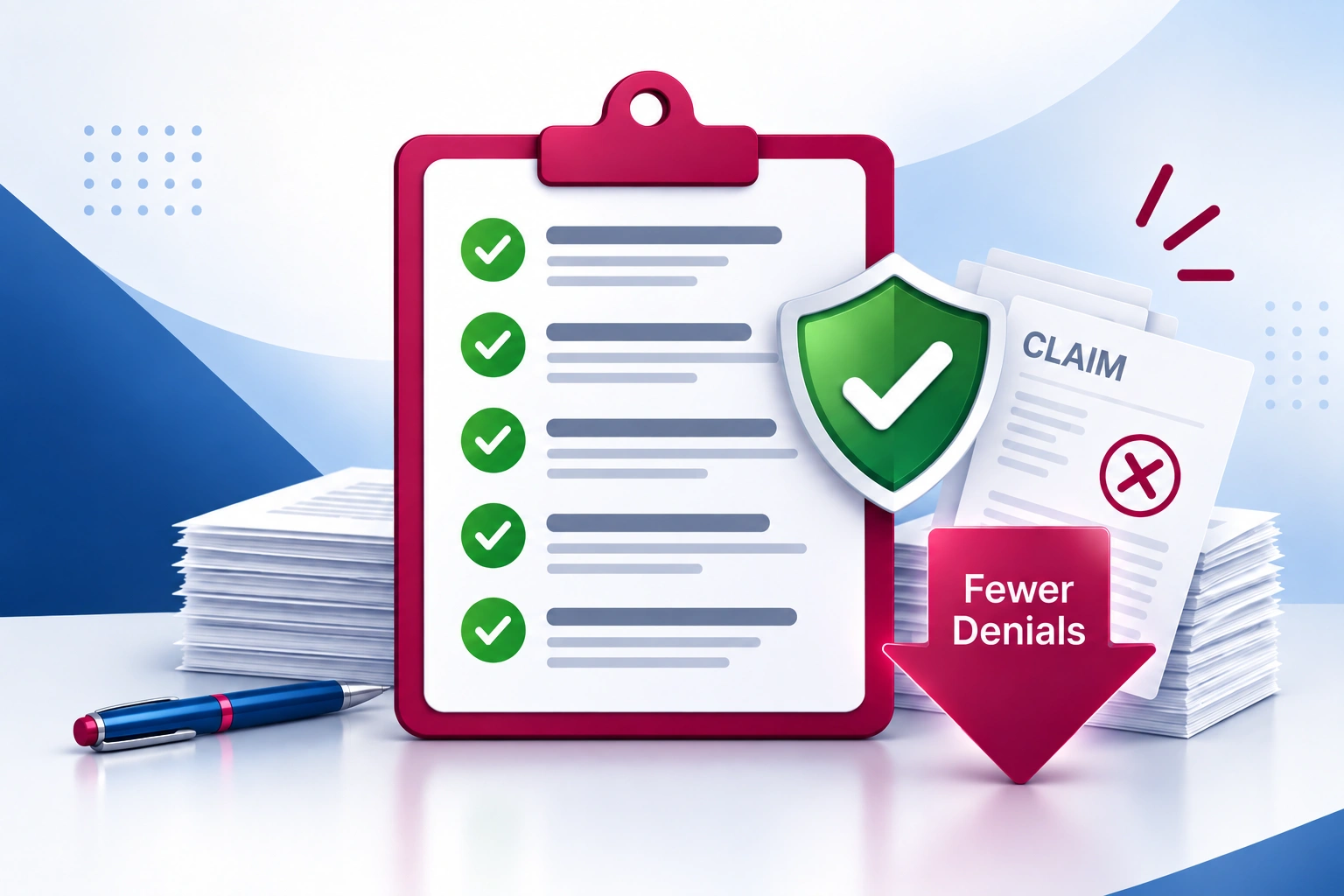
Improvement of coding quality now acts as a shield against denials. It strengthens the connection between documentation and clinical reality, reducing contradictions that auditors immediately flag.
Common Challenges Facing Agencies
Many agencies face issues that are not reflective of poor care, but of the realities of fast-paced documentation.
Documentation Lacking in Clinical Depth
Task-oriented notes give coders less context. Without clinical detail, codes may appear unsupported.
OASIS Documentation That Feels Generic
OASIS responses based on habit or guesswork weaken the overall picture and confuse the coding process.
Inconsistencies Between Disciplines
Reviewers question the integrity of the record when clinicians describe symptoms or function differently.
High Rework Rates
Clarifications slow everything down. High rework rates push AR days up.
Limited Insight into Payer Behavior
Lack of visibility into denial patterns keeps agencies reactive instead of prepared.
These challenges are solvable when documentation, coding, and clinical teams operate with a shared understanding of what makes a claim defensible.
Best Practices for Sustainable Coding Efficiency
Agencies leading in 2025 follow operational habits that keep coding aligned with clinical reasoning and payer expectations.
Establish Clear Documentation Standards
Standards help clinicians provide detail that explains what they saw, why they acted, and how the patient changed over time. This forms the basis for precise home health coding.
Strengthen OASIS Documentation Review
Ongoing OASIS checks confirm that scoring aligns with the narrative. This reduces inconsistencies that lead to denials.
Improve Communication Between Clinical and Coding Teams
Regular conversations between coders and clinicians prevent misunderstandings and reduce rework.
Apply Consistent Sequencing Frameworks
When sequencing reflects the true clinical scenario rather than convenience, the record becomes stronger and more integrated.
Invest in Coding Quality Improvement Processes
Internal reviews and ongoing education highlight patterns that weaken claims. Correcting these patterns fortifies compliance and reduces coding errors over time.
Leverage Technology for Support
Technology can point out contradictions, missing details, and incomplete reasoning. It speeds review without displacing clinician judgment.
Preparing Teams for the Next Wave of CMS Updates
It offers agencies a major advantage to stay ahead of CMS expectations.
Prioritize Continuing Education
Teams familiar with current requirements adapt faster and make fewer mistakes.
Strengthen Internal Review Processes
Consistent checks at admission, recertification, and discharge catch issues before they turn into denials.
Use Audit Feedback to Improve Workflows
Audit reports often reveal gaps in process, not performance. Agencies studying these reports refine workflows and reduce downstream issues.
Prepare for Stricter Narrative Expectations
Documentation must reflect measurable change, symptom detail, and clear clinical reasoning. Coders depend on this information to support the claim.
How Red Road Supports the Future of Home Health Coding
Red Road strengthens home health coding by improving the relationship between documentation, coding accuracy, and compliance stability. Review systems surface weak points early. Clinicians and coders share visibility into the narrative. OASIS responses and coding choices remain aligned from the beginning.
This results in:
- Fewer denials
- More predictable audits
- A clearer clinical story
- Claims that reflect the patient’s true condition
- Coding becomes an advantage, not a recurring challenge.
Where Home Health Coding Is Headed Next
Coding home health in 2025 requires documentation that holds together from admission to discharge. Accuracy requires clarity. Compliance requires consistency. Stability requires minimizing rework and maintaining a chart that makes sense from every angle.
Home health care coding has evolved into a clinical and operational strategy that shapes financial outcomes and audit readiness. Strengthening alignment today will pay dividends throughout 2025 and beyond through fewer denials, cleaner claims, and a more defensible record.

.svg)
.webp)